Across cultures and cosmologies, birth is understood as more than a biological event—it is a sacred threshold, a moment when life enters the world in relationship with land, community, and spirit.
We are honored to share this article by Adriana Salazar Vega, Colombia Project Coordinator for the Midwifery Project: Study of Ancestral Kággaba Knowledge on Maternity, based in the “Heart of the World’ in Sierra Nevada de Santa Marta, Colombia. This writing offers a window into the ancestral midwifery traditions of the Kággaba (Kogi) people, who hold childbirth as a deeply spiritual, communal, and earth-connected ceremony. Rooted in the Law of Origin and guided by elders, midwives, and spiritual authorities, these practices continue to safeguard life, balance, and continuity across generations.
The Center for Shamanic Education & Exchange is grateful to have supported aspects of this community-led initiative, and to help amplify this sharing of knowledge—offered here with respect for its depth, integrity, and living lineage. You can read more about this project here.
Jaba Hate Sé: The System of Indigenous Health Development and Study of Ancestral Kággaba Knowledge on Maternity
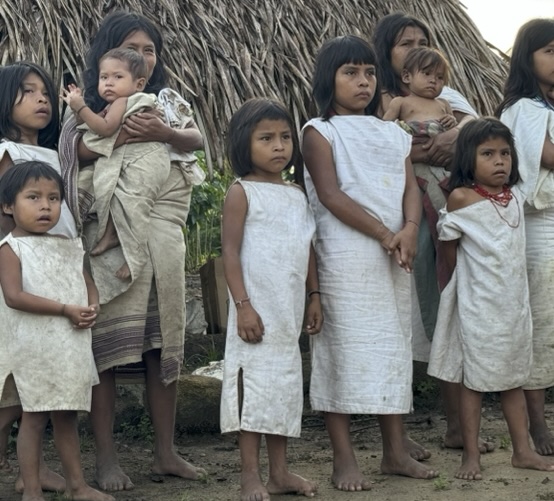
Ancestral Wisdom in Childbirth –
An initiative that strengthens Indigenous Kággaba midwifery women, focusing on midwifery spiritual and physical practices knowledge transmission.
The study focuses on the ancestral knowledge that preserves the integrity of the techniques that protect and accompany the Kággaba woman in her natural, physiological, and spiritual birthing process. This approach is based on a deep respect for the cycles of life, aiming to understand the mechanisms that safeguard health, simplicity, and truthfulness in every action and decision made around motherhood.
Indigenous midwifery, particularly that of the Kággaba or Kogi community, understands the woman’s body as an extension through which the child descends from the sacred ancestral territory. This territory, recognized as the Chief, is where the máma (spiritual leader) assigned by consultation accompanies the midwife on the day of birth to ensure, among other things, that through spiritual payment, a deep and unbreakable connection is established between the child’s life and the heart of the world.
This approach, which acknowledges the woman as the bearer of life, is expressed through practices and beliefs that view motherhood not only as a physical process but also as a deeply spiritual one, marking the ceremony of childbirth.
The Placenta –
For the Kággaba culture, the placenta is seen as the portal of life. It is planted in the Earth as the first ritual of life, in an act that symbolizes the beginning of balance and harmony in the existence of the child, in connection with the biogeographical site that will bind them to this world for life. This act, in addition to its symbolic dimension, has a practical purpose: the placenta, when connected with the Earth, becomes a source of vital energy that provides the newborn with the strength and security necessary for their entire life in harmony with the natural laws of the cosmic order / Law of Origin/. Thus, childbirth is not only a physiological event but also a moment of union between the human being and the planet that sustains them.
Motherhood as a Communal Act –
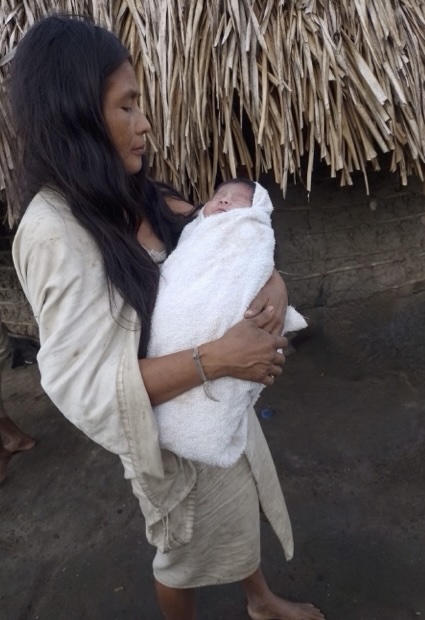
“The role of the midwife is not only that of a physical caregiver but also that of a spiritual guide.”
Motherhood, viewed fro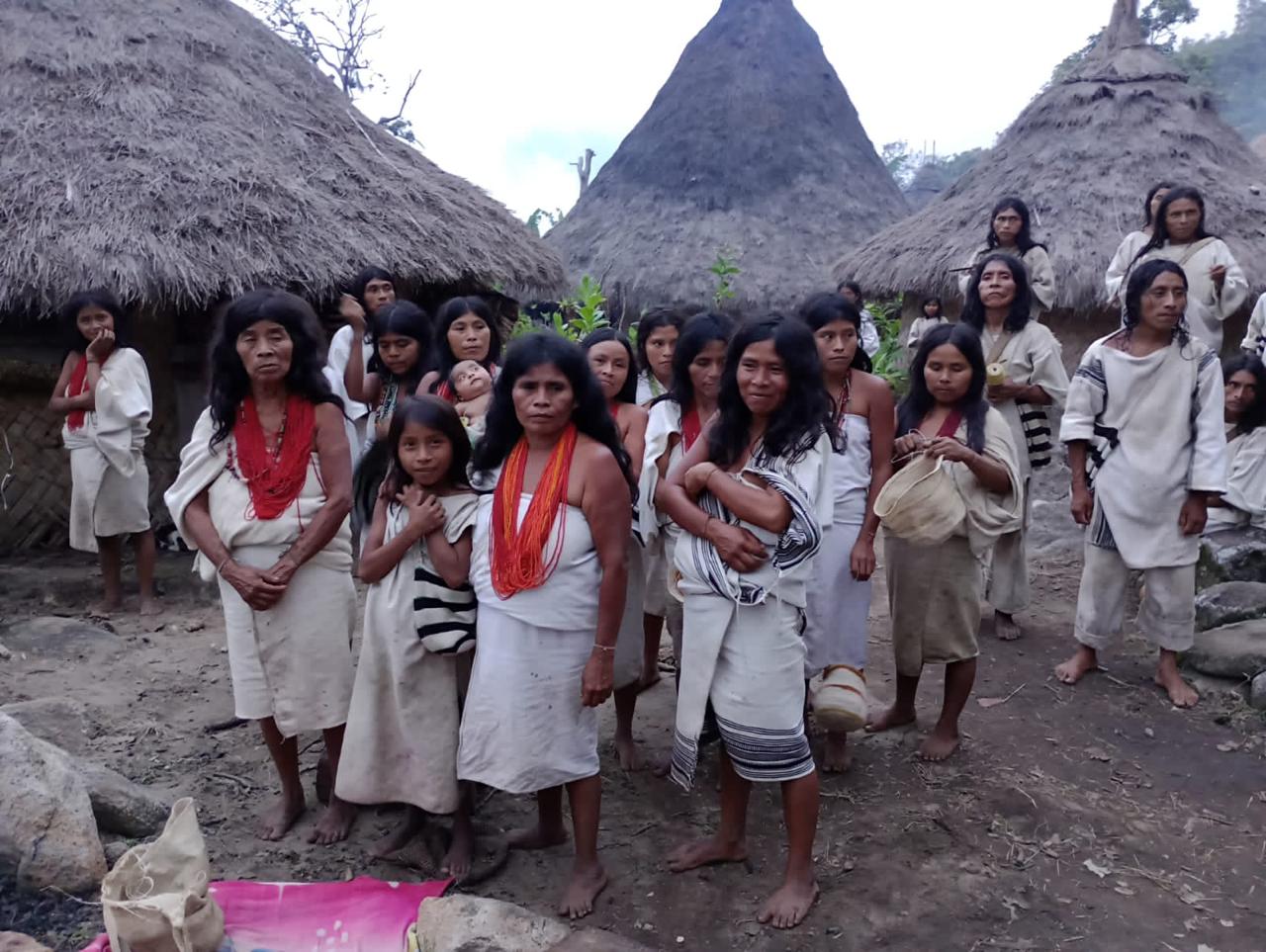 m the perspective of comprehensive healthcare, involves a series of responsibilities that go beyond the individual and require community interrelation. In the Kággaba community, it is understood that the well-being of both the mother and child depends not only on good physical practices but also on those practices that, through consultation and confession, bring order to the parents’ thoughts, providing the community with the necessary protocol to ensure the preservation of the Kággaba ancestral culture. This is why the process of midwifery and pregnancy support is infused with ancestral wisdom, passed down through a complex system of knowledge that includes both theory and practice.
Midwifery, as a system of knowledge, is selectively transmitted from generation to generation and remains key as the autonomous means of maternal care in the indigenous communities of La Sierra Nevada de Santa Marta. The system of order, security, and control is provided through practices and rituals led by the mámas, such as Suma, Kuntshawa, Kabizhi, Guiaba, Shibadlama, Kuina, Kahshi, and Zhatukua. These ensure that the pregnant woman receives the necessary spiritual support, with each practice adapted to the different stages and needs of pregnancy.
These spiritual work techniques not only focus on the mother’s body but also promote her connection with the invisible and earthly dimensions that sustain life in the Sierra. In this context, the role of the midwife is not only that of a physical caregiver but also that of a spiritual guide, accompanying the woman through each phase of her pregnancy and ensuring that both she and the baby are protected in their transition to birth.
Each of these practices integrates ethical principles and values that reinforce respect for life, the care of the mother and child, and the maintenance of balance between the family’s well-being and their behavior on Earth.
Ancestral Wisdom in Service of Women
Today, female education is enriched by recovering and valuing these ancestral techniques, which offer a holistic view of pregnancy and childbirth. By integrating this knowledge into the contemporary context, we can understand that motherhood is not merely a biological event, but a profoundly spiritual act that offers the opportunity to engage the woman’s body, mind, and spirit, as well as her connection to the community and the cosmos.
In this process of rescuing and revitalizing this knowledge, not only is the expansion of a woman’s capacity magnified and tested, but her indispensable role in establishing harmony over the weaknesses she may experience during pregnancy is also strengthened. The only force that enables her to endure is to give her all, so that her body and mind can live through the natural transformation that provides a safe and loving container to nurture a divine creation.
Therefore, female education in Western society must be a space that not only promotes technical and scientific knowledge but also, by complementing it with the intimate care that a pregnant mother requires, the ancestral wisdom carried by midwives provides throughout the cycle, offering relief to the expectant mother as she learns through her body.
Jaba Jate Sé Project
This is a project consulted by the mámas of the Ezuama Kadlabangaka and Nabuwiyi (Kággaba or Kogi spiritual authorities), which guided the establishment of a strengthening cycle for the management and internal work of midwifery in La Sierra. Jaba Jate Sé can be understood as the response to a spiritual consultation aimed at following up on the Kággaba health system of the Sierra Nevada de Santa Marta. It involves the review and work of maternal health, midwives, and mámas regarding the proper management and internal protocol for the health of newborns in communities located in the high regions of the Sierra.
Management Plan, Mandate of the Law of Origin for Midwifery
The union of the elderly mámas, spiritual authorities of the Kággaba, around the development of the mandate of the Law of Origin for Midwifery has allowed the realization of a series of spiritual payments to Mother Earth / Father Sun (mukuaba / mukuakukui).
There, the consultation has been made possible in a ceremonial way, along with the manifestation of the use and customs of the Kággaba to guide the direction of the good service of the Jaba Jate Sé model of health (Shijuadla).
 The guiding principle of the authorities’ search is to find the resolution of a “Paz y Salvo” (a peace and clearance certificate) to guide men and women in dealing with disease management, causes of accidents, sleep problems, lethargic attitudes, and the eventualities that make childbirth difficult.
To resolve problems related to the role of midwifery, the Jaba (woman) midwife is in charge of female matters, and Jate (man) is responsible for male matters. This ensures that, in the relationship between Mother Earth and Father Sun, our world also remains in peace and balance. This is the role of Midwifery and the work that is currently sustained from the heart of the World, Sierra Nevada de Santa Marta, Colombia.
However, it is important to highlight that in 2024, a significant advancement was made with global recognition, where Midwifery, along with its techniques and knowledge, was declared by UNESCO as an intangible cultural heritage of humanity for the world. This achievement internally confirmed the progress made with the spiritual or invisible work surrounding Midwifery in the Jaba Jate Sé Project.
It is clear that since Midwifery is the only means of receiving births in the high Sierra where the Project is being developed, it is crucial to continue with the process of self-study and self- strengthening to ensure the highest rigor in the quality of knowledge transmission being offered in the villages. For this, the selection of the sanhas and mámas of the Ezuamas and their support in this process is vital. Additionally, it is important to ensure the effective active practice of transmission through meetings between apprentices and trainers.
This is undoubtedly a challenge that runs parallel to the new reality faced by the gradual but important transition in the way of life of the Kággaba, opening
new life perspectives that are separate from their tradition, as well as new opportunities to merge with what now needs to be integrated, bringing the best of both worlds that, now more than ever, requires respectful cooperation to implement important advancements for the challenges we face. Thus, the Jaba Jate Sé project paves the way in the Aluna Sé Mulkuaba Mukuakukui Permanent Research Center to advance this strengthening, guiding the construction of a Kággaba ancestral protocol proposal for the management of new births in the world.
Context and Acknowldgement:
- 10 Kogi Midwives Indigenous Gatherings
- 20 Midwives were involved in the Gatherings
- Delivery of a Sewá, which connected an international midwife after a rigorous process of midwifery study and knowledge strengthening.
- Partner organizations:
- The Center for Shamanic Education and Exchange
- International Center for Cultural Studies, ICCS
- Be the Earth Foundation
- The Fountain
- Ancestral Heart
The Center for Shamanic Education and Exchange offers our deep gratitude to Adriana Salazar Vega for her careful, respectful articulation of this work, and for her ongoing dedication to supporting Indigenous women, elders, and midwives through the preservation and strengthening of ancestral knowledge systems. We also extend our thanks to The Midwifery Project and its partner organizations for their long-term, community-rooted collaboration in the Sierra Nevada de Santa Marta. If you would like to learn more about Adriana’s work, please visit ICCS.
This sharing is offered in the spirit of honoring living lineages—knowledge that is not static or historical, but actively practiced, transmitted, and safeguarded by the Kággaba people themselves. We are grateful for the opportunity to stand in respectful support of this community-led work and to help amplify voices and traditions that continue to uphold balance, care for life, and right relationship with the Earth.
Thank you for receiving this article and for being a part of our work to sustain the spiritual wisdom, ways, and traditions of Indigenous peoples. May this reflection be received as an invitation to listen deeply, to honor the sacredness of birth, and to remember the wisdom that lives at the roots of humanity.
If you are inspired to support this work, we welcome your tax- deductible contribution.