
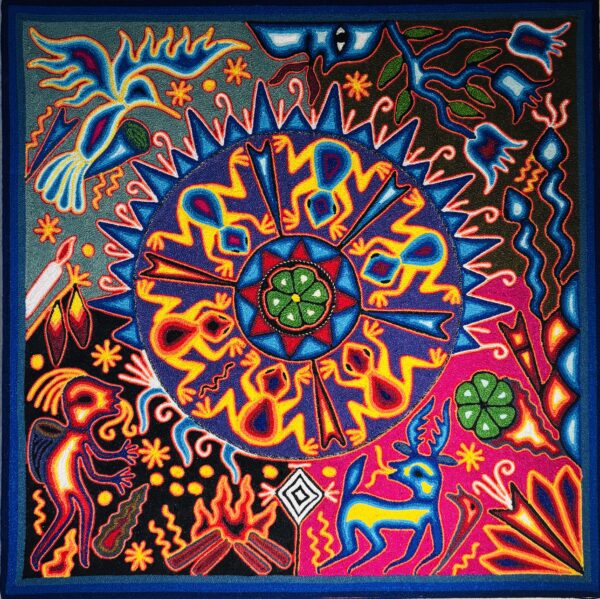
La Ceremonia al lado del Fuego – Wixarika Nierika Yarn Painting
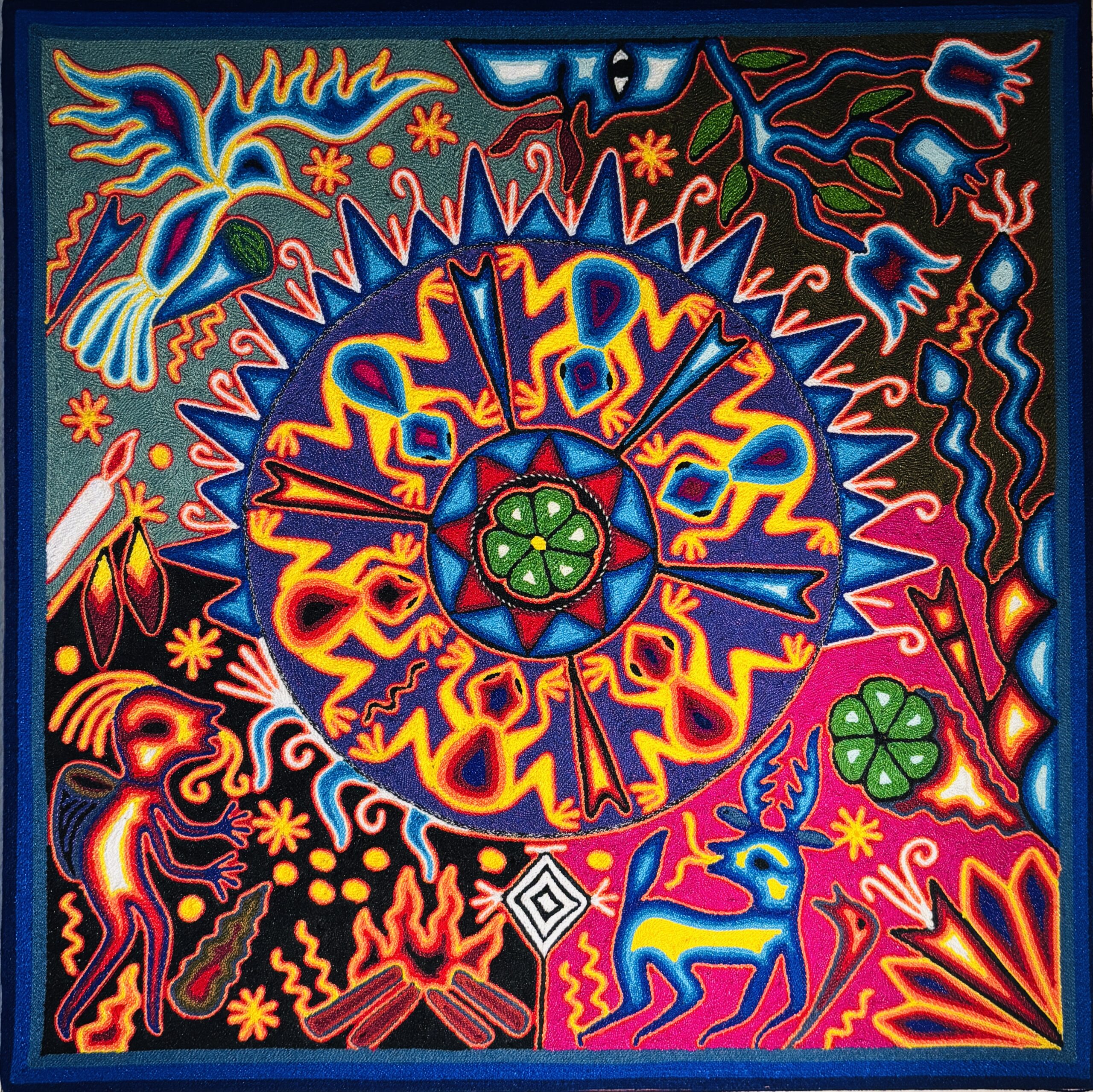
This Wixarika Huichol yarn painting is made by the Carrillo Bautista Family in the San Luis Potosi region of Mexico, in Real de Catorce, a mountain town above Wirrikuta, the Peyote Gardens. This piece is unique and made by hand pressing individual threads on to a wax covered shape.
made of yarn, wax, wood; measures 2' x 2'
Handwritten by the artist on the back of this piece:
En este cuadro vemos en el centro el (Hikuri) peyote que representa el conocimiento la sabiduría y alrededor unas ramas que también el veneno de ellos es medicina para varias enfermedades. y el águila que fundamental para el marakame (chaman) ya que ahi proviene las poderes que ello tienen con las plumas para hacer la limpia o hacer cualquier curación. la parte de abajo vemos al Venado Azul (Kauyumarie) que representa al mismo Hikuri y al marakame (chaman) en una Ceremonia al lado de fuego. el comunicándose con los dioses y circulo representa la tierra.
Approximate Translation:
In this painting, we see the peyote (Hikuri) in the center, representing knowledge and wisdom, and surrounding branches whose poison is also used as medicine for various illnesses. The eagle, which is essential for the marakame (shaman), is where the powers they possess with their feathers for cleansing or any other healing come from. Below, we see the Blue Deer (Kauyumarie), representing Hikuri himself and the marakame (shaman) in a ceremony by the fire. He communicates with the gods and the circle represents the earth.
There is a picture wire on the back of this painting's wooden frame to allow it to be hung easily.
*For the Wixarika Huichol people, a jícara is far more than just a container. It’s a ceremonial vessel, traditionally made from the dried fruit shell of the calabash tree. In Wixárika language it’s often called xukuri (or jícaras in Spanish), and it’s deeply connected to their cosmology, ceremonial life, and identity. A jícara is used to hold offerings such as maize, cacao beans, coins, candles, feathers, crystals, and other symbolic items. Each object placed inside represents prayers, blessings, or petitions to the deities — especially Grandfather Fire or Tatewari, Grandmother Growth or Takutsi Nakawe, and the Blue Deer, Kayumari.
The Indigenous Mexican Wixarika Huichol artists create intricate art pieces using traditional Wixarika symbols and allies. Representations of sacred objects, ceremonies, and the Wixarika cosmovision are depicted in these traditional artworks. Artisans are compensated fairly for their art and sales of these items further support Indigenous led projects that perpetuate spiritual traditions in their communities.
You can learn more about some of these artists, their work, and their heritage here: https://shamaniceducation.org/wixarika-huichol-artists-traditions/
Reviews
There are no reviews yet.